

Navajo Rug Cleaning
Navajo rugs are among the most culturally significant and collectible textiles woven in North America, each one a hand crafted work of art representing the weaving traditions, regional styles, and individual artistry of Navajo weavers. They are also among the most frequently mishandled rugs when it comes to cleaning. Authentic Navajo textiles are hand-spun, hand-dyed, and hand-woven with natural wool using techniques and materials that are fundamentally incompatible with standard carpet cleaning methods. At Fuzzy Wuzzy Rug Cleaning Company, we offer professional Navajo rug cleaning in Seattle that respects the cultural importance, material construction, and collector value of every piece we handle. Whether you own a contemporary Two Grey Hills, a classic Ganado, or a century old transitional weaving, we have the expertise to clean it safely. Request a free quote today.
Why Navajo Rugs Demand Specialized Cleaning
Authentic Navajo rugs are fundamentally different from commercially produced rugs in their materials, construction, and cultural significance and all three of those differences have direct implications for how they must be cleaned. Here is what makes Navajo rugs uniquely vulnerable during cleaning:
- Hand spun wool, Navajo weavers traditionally use hand spun Churro sheep wool, which has a coarser, more open fiber structure than factory spun wool. This structure is part of what gives Navajo rugs their characteristic texture and durability, but it also means the fiber absorbs moisture more rapidly and dries more slowly than tightly spun commercial wool.
- Natural and vegetal dyes, traditional Navajo rugs use dyes derived from plants, minerals and insects, sumac, juniper, rabbitbrush, indigo, and cochineal among them. These natural dyes are sensitive to pH changes, alkaline detergents, and temperature in ways that synthetic commercial dyes are not and color bleeding is a genuine risk without careful dye testing.
- Aniline and commercial dyes in transitional-era pieces, Navajo rugs from the late 19th and early 20th century transitional period frequently used commercial aniline dyes that were imported and adopted during that era. Aniline dyes are notoriously unstable when wet and require particularly careful handling to prevent catastrophic color bleeding.
- Flatweave construction, Navajo rugs are woven as flatweaves with no pile layer, meaning the warp and weft threads that create the pattern are the same threads that bear all physical stress during cleaning. Without a pile layer to absorb and distribute the forces of washing, flatweave structures are more vulnerable to distortion, edge curling and warp thread stress.
- Warping and dimensional distortion, Navajo rugs have a strong tendency to go out of square when wet if not properly supported and dried flat; the warp threads contract unevenly during drying, causing the rug to distort in ways that are very difficult to fully correct after the fact.
- Cultural and monetary value, authentic Navajo rugs range from hundreds to tens of thousands of dollars in collector value, and many are irreplaceable family or community heirlooms. The consequences of improper cleaning are not just aesthetic, they can permanently diminish a piece of genuine cultural and monetary significance.
At Fuzzy Wuzzy Rug Cleaning Company, every Navajo rug receives a thorough pre-inspection and a cleaning process calibrated specifically to its dye type, fiber condition, and structural integrity before any water is introduced.
Types of Navajo Rugs & Weavings We Clean
We clean authentic Navajo rugs from all major weaving regions and periods, including the ones mentioned below.
Classic Regional Style Navajo Rugs
The major Navajo weaving regions each have distinctive characteristics, Two Grey Hills with its intricate natural wool patterns, Ganado with its bold red and black geometric designs, Wide Ruins with its vegetal dyed earth tones, and Teec Nos Pos with its ornate bordered layouts. Each regional style involves different dye types and wool preparations that influence our cleaning approach for that specific piece.
Transitional Era Navajo Weavings (1870s-1920s)
Transitional era Navajo rugs represent the period when weaving shifted from blanket production for personal use to rug production for commercial trade. These pieces frequently contain aniline dyes that are highly unstable when wet, and their wool may be more brittle due to age. We treat all transitional era pieces with our most conservative dye testing protocol before any wet cleaning begins.
Early Classic & Blanket Style Weavings
Pre 1870 Navajo blankets and early classic weavings are among the most valuable and fragile Native American textiles. These pieces require the most careful handling of all, thorough dye stability assessment, hand washing with the gentlest possible solutions, and extended flat drying with careful tension management to prevent dimensional distortion.
Contemporary Navajo Rugs
Modern Navajo rugs woven from the mid 20th century to the present generally use more stable commercial dyes and machine, spun wool blends alongside traditional hand spun fiber. Contemporary pieces are somewhat more tolerant of wet cleaning than older weavings but still require dye testing and a wool safe, cool water process to protect the fiber and pattern integrity.
Navajo Style Rugs (Non-Authentic)
Many rugs sold as “Navajo-style” or “Southwestern” are machine-made reproductions using synthetic fibers and commercial dyes, not authentic hand-woven Navajo textiles. These rugs are generally more tolerant of standard cleaning methods but still benefit from professional care. We identify fiber and construction type during our initial assessment and clean each piece accordingly.
Other Native American Textiles
We also clean other authentic Native American woven textiles, including Pueblo weavings, Hopi textiles, and Zapotec rugs from Oaxaca, all of which share construction characteristics and cleaning sensitivities with Navajo weavings. We assess each piece individually before recommending a cleaning approach.
See Us In Action
Fuzzy Wuzzy Rug Cleaning Company offers a truly green approach to deep cleaning your area rugs, carpets and furniture, making them look and smell new.
Our Navajo Rug Cleaning Process
Every Navajo rug that comes to us is treated with the care and respect its cultural significance demands.
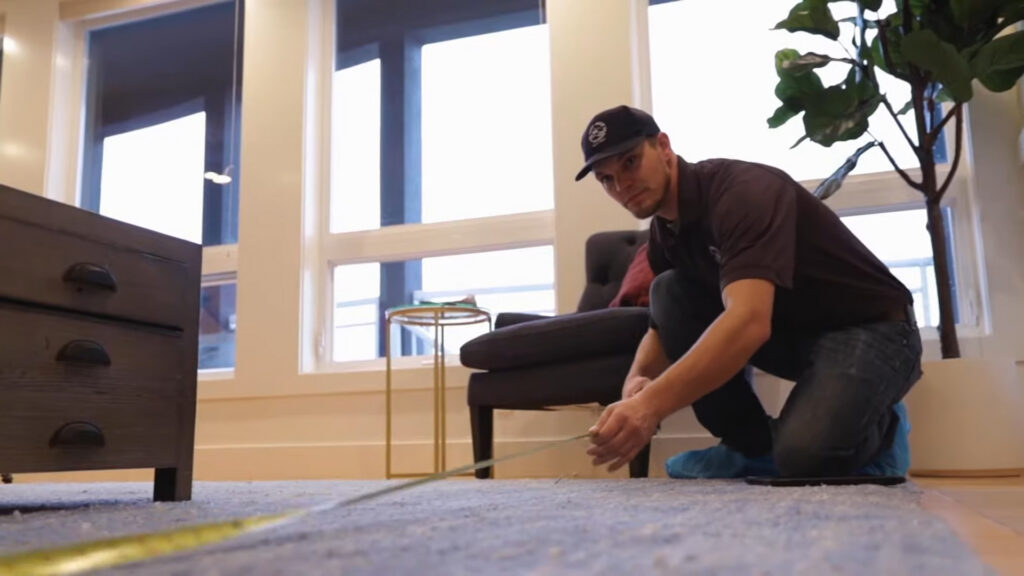
Provenance Documentation
We examine the rug thoroughly, fiber type, dye identification, weave structure, condition of warp and weft threads, any existing repairs, fringe condition, and structural integrity. For significant pieces, we recommend documenting condition with photographs before cleaning begins, which we are happy to provide for insurance and appraisal purposes.
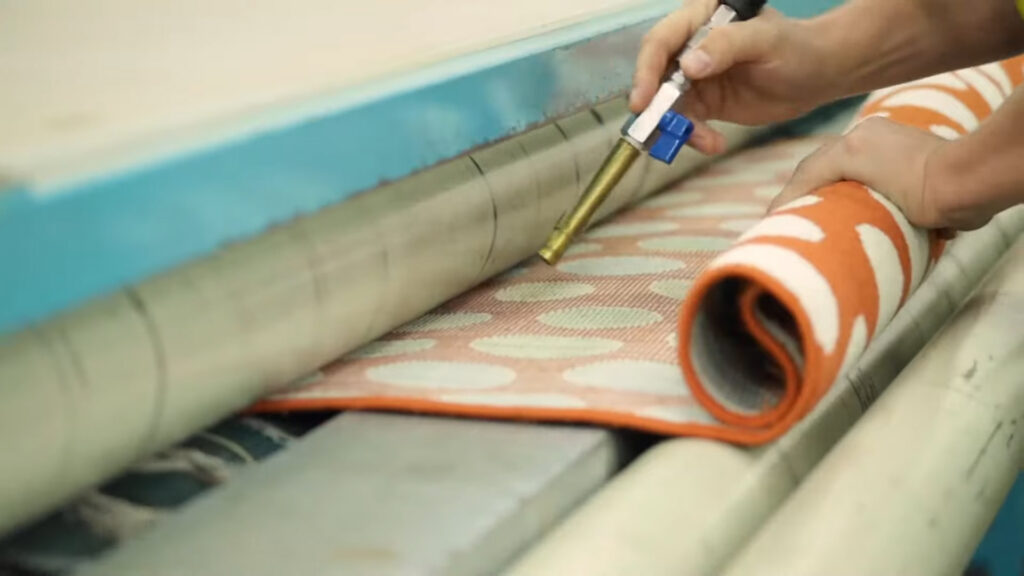
Comprehensive Dye Stability Testing
Every color in the rug is individually tested for stability under wet conditions before any cleaning solution is applied. This is the most critical step in Navajo rug cleaning, particularly for transitional era pieces with aniline dyes, where a single unstable color can bleed catastrophically across the entire pattern if not identified and managed before washing begins.
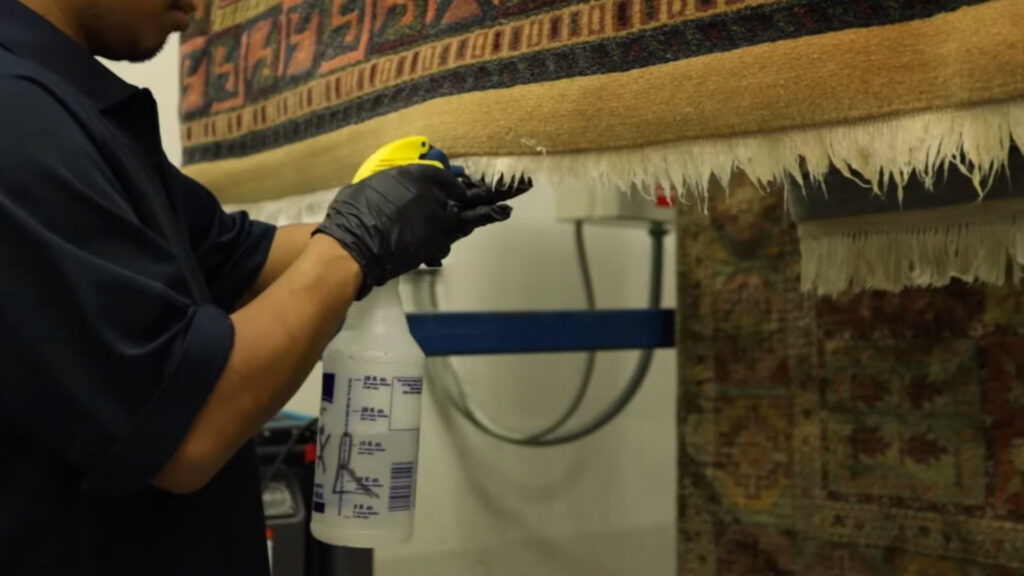
Dry Soil & Debris Removal
We remove all dry soil, dust and embedded debris from the flatweave structure before introducing any kind of moisture. Navajo flatweaves trap dry particulate between the warp and weft threads where it becomes extremely abrasive over time, removing it dry first and foremost reduces the cleaning load and protects the thread structure during washing.
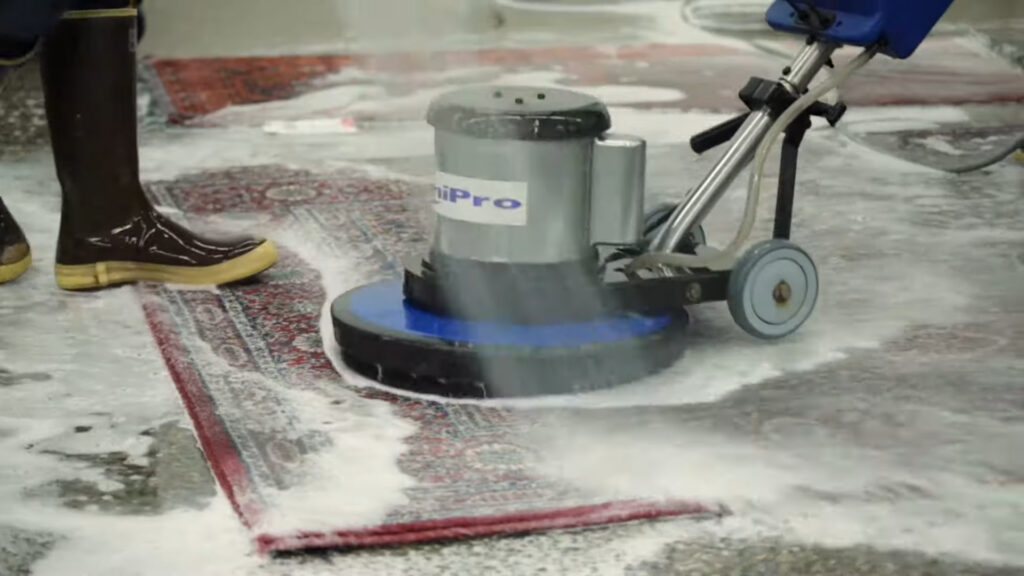
Gentle Hand Washing
The rug is hand washed using cool water and pH-neutral, wool safe solutions matched to the specific dye type identified during testing. We wash flatweave Navajo rugs face down to minimize direct agitation of the pattern surface, working the solution through the weave structure.
Tension Managed Flat Drying
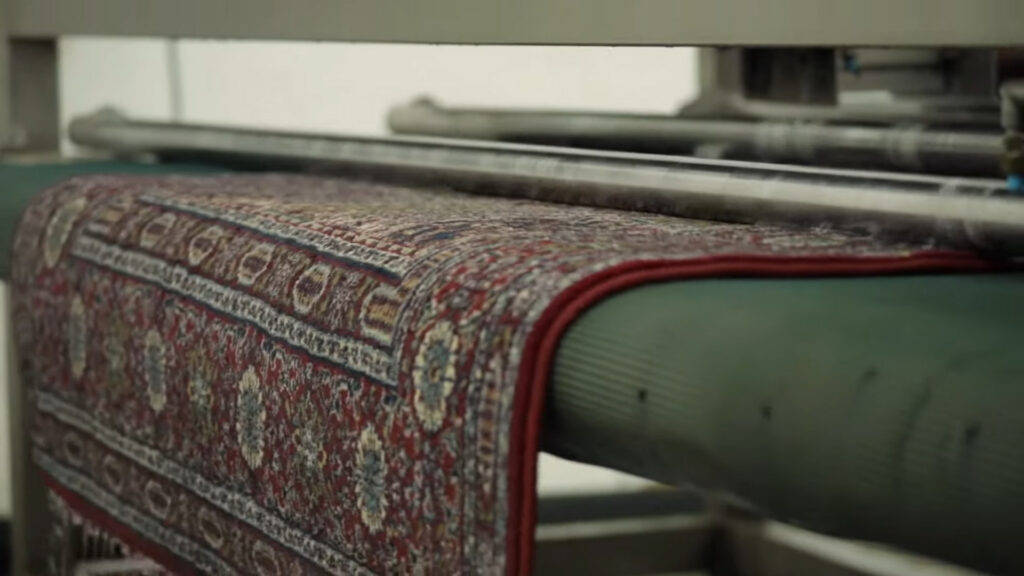
All cleaning solution is completely rinsed from the weave before drying even begins. The rug is then laid completely flat on a clean surface and carefully squared and tensioned back to its original dimensions before the wool sets during drying, this is the step that prevents the warping.
Fringe Care & Delivery
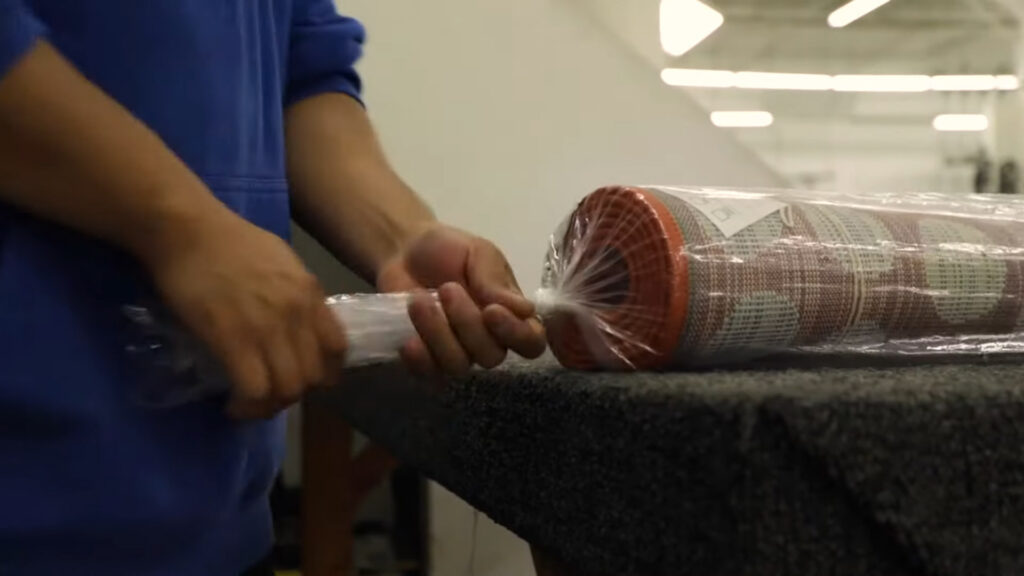
Once fully dry, we inspect the rug for dimensional accuracy, color integrity, and weave condition, hand comb the fringe if present, and perform a final quality check. The rug is rolled, never folded, in acid free paper or breathable fabric and prepared for safe delivery.
Navajo Rug Cleaning Service Areas Near The Seattle Area
Fuzzy Wuzzy Rug Cleaning Company provides Navajo rug cleaning with free pickup and delivery across the greater Seattle metro area, including:
- Seattle neighborhoods: Capitol Hill, Madison Park, Laurelhurst, Queen Anne, Magnolia, Madrona, Eastlake, Montlake, Bellevue, Green Lake.
- Eastside: Bellevue, Kirkland, Redmond, Medina, Clyde Hill, Mercer Island, Sammamish, Issaquah.
- North: Shoreline, Kenmore, Bothell, Woodinville, Edmonds.
- South: Renton, Tukwila, Burien, Federal Way.
Have a particularly valuable or fragile Navajo weaving outside our standard service zone? Contact us, we regularly make special arrangements for high value pieces.
Free Pickup And Delivery
Fuzzy Wuzzy offers free pickup and delivery on all area rug cleaning services throughout King, Pierce, Snohomish, Skagit and Whatcom Counties. This covers the majority of Western Washington, however, if you are unsure as to whether or not your home is covered within our delivery radius, give us a call. Our rug pickup and delivery service is 100% free. That’s right!
Navajo Rug Cleaning FAQ
Still need a few more questions answered? Check out some of our frequently asked questions from our customers.
Yes, but only by specialists who understand the specific dye types, fiber characteristics, and flatweave construction of Navajo weavings. Standard carpet cleaning methods, alkaline shampoos, and hot water extraction are all incompatible with authentic Navajo textiles. At Fuzzy Wuzzy Rug Cleaning Company, we use cool water, pH-neutral wool-safe solutions, comprehensive dye testing and tension-managed flat drying to clean Navajo rugs safely regardless of their age or weaving period.
Aniline dyes were widely used in Navajo weaving from roughly the 1870s through the early 1900s. If your rug was woven during this transitional period, aniline dye instability is a real concern. Visual signs include particularly vivid, commercially bright colors, especially reds, oranges, and purples, that look different in character from the more earthy, muted tones of natural vegetal dyes. The only reliable way to assess dye stability before cleaning is professional spot testing, which we perform on every color in every Navajo rug we clean.
Navajo rug cleaning at Fuzzy Wuzzy is priced based on the rug’s size, weaving period, dye type complexity, condition, and the level of care required. Transitional era pieces with aniline dye concerns and early classic weavings with fragile fiber require more time and caution than contemporary pieces, and pricing reflects that. We provide a detailed written quote after our initial inspection, contact us for a free assessment.
For rugs of significant monetary or cultural value, a professional appraisal before cleaning is a wise step, both for insurance documentation and to establish a pre-cleaning condition record. We are happy to recommend reputable textile appraisers in the Seattle area who specialize in Native American weavings. We also provide written condition reports with photographs before and after cleaning for any piece where documentation is requested.
Yes. Fuzzy Wuzzy Rug Cleaning Company offers repair and restoration services for Navajo rugs including re-weaving of damaged areas, warp thread stabilization, fringe repair, and edge binding repair. We assess structural damage during the initial inspection and discuss repair options and costs before any work begins. Cleaning and repair are often combined into a single service visit for convenience.
Yes. Fuzzy Wuzzy Rug Cleaning Company provides free pickup and delivery for Navajo rug cleaning throughout Seattle and most surrounding areas including Bellevue, Kirkland, Redmond, Mercer Island, Medina, Shoreline, and Renton. Navajo rugs are rolled, never folded and wrapped in acid free paper or breathable fabric for transport to protect both the fiber and any existing repairs.
For Navajo rugs in regular display or use, professional cleaning every 3-5 years is a general guideline, less frequently than most other rug types because the flatweave structure holds soil less deeply than a pile rug. Rugs on display rather than underfoot may need cleaning even less frequently. Regular gentle vacuuming with a suction only attachment and prompt attention to any spills will extend the time between professional cleanings significantly.